

AI summary
- XRPL's software fixes are approaching activation, but the lending and vault amendments still require validator approval.
- JPMorgan has expanded its deposit token to Ethereum. This is not an announced integration with XRPL or evidence of XRP demand.
- Cross River's RLUSD integration connects XRPL settlement to existing banking services; transaction volumes remain the evidence to watch.
- Mastercard's Stablecoin Security addresses financial-crime risks, without an announced RLUSD or XRPL integration.
- Institutional adoption should be measured by operational usage, liquidity and settlement activity—not announcements alone.
The XRP Ledger is approaching an important technical milestone, but there's a distinction investors need to understand: preparing the infrastructure for institutional lending is not the same as launching a lending market.
On October 19, new reporting confirmed that an XRPL software-fix amendment was approaching activation, while the network's proposed lending and vault features still lacked sufficient validator support.
Meanwhile, Cross River Bank's RLUSD integration offers a more immediate example of how regulated banks can connect traditional financial services to blockchain settlement. Deutsche Bank is also preparing to enter digital-asset custody, reinforcing the broader institutional adoption trend.
Together, these developments highlight two sides of the same transition: banks are beginning to integrate digital-asset infrastructure, while public blockchain networks are building the financial tools needed to support more sophisticated institutional activity.
XRPL Lending: The Infrastructure Is Moving Forward, but Approval Is Still Pending
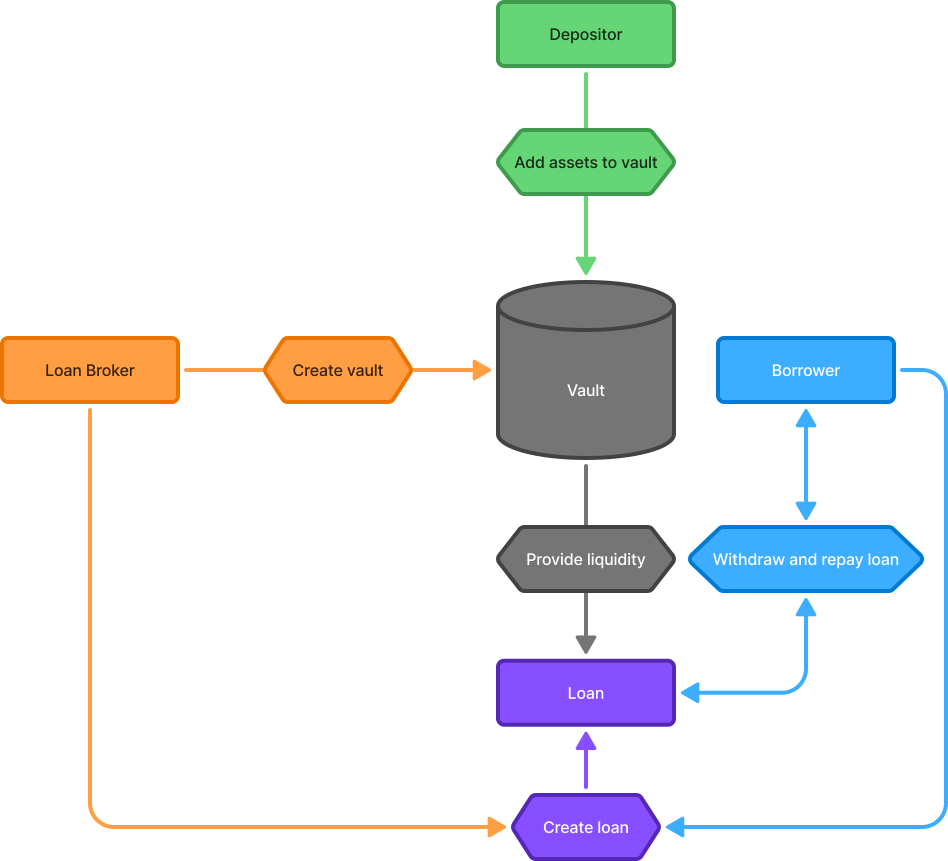 Diagram: XRPL.org documentation. Describes the proposed protocol, not evidence of activation.
The XRP Ledger's proposed native lending system took another step toward technical readiness on October 19.
According to CoinDesk, an amendment package known as fixCleanup3_4_0 had secured 29 validator votes, enough to enter its activation countdown. Assuming support remains above the required threshold, the fixes are expected to activate around October 23.
The package addresses software issues involving lending, vault calculations and token-permission controls.
But the more significant development is what hasn't happened yet.
The proposed lending amendment had only 19 validator votes, while its related vault amendment had 21. Both require at least 29 votes, maintained for two consecutive weeks, before activation.
Why native lending could change XRPL's institutional proposition
Traditional lending involves several parties: lenders provide capital, borrowers receive funding, and intermediaries manage credit assessment, repayment and risk.
The proposed XRPL framework would bring more of that financial infrastructure directly onto the blockchain.
Lenders could deposit assets into vaults, while loan brokers administer fixed-term borrowing arrangements. The ledger would record loans and repayments, although credit assessments and borrower approval would remain off-chain.
Importantly, the proposed architecture supports uncollateralized lending. Borrowers would not necessarily deposit collateral before receiving funds, making broker underwriting and credit-risk management particularly important.
For institutions, this could create opportunities to manage lending activity alongside payments, tokenized assets and stablecoin liquidity.
Consider a payment company that needs temporary liquidity while completing cross-border settlement. A lending facility connected to blockchain infrastructure could eventually provide another source of financing.
That is a potential use case, not evidence that such institutional borrowing is already happening on XRPL.
For XRP, native lending could create additional opportunities for liquidity provisioning or asset deployment if institutions actually use XRP in lending vaults.
However, the framework can also support other eligible digital assets. Increased lending activity would not automatically translate into proportional XRP demand.
The immediate milestone is the software-fix activation. The more consequential milestone will be validator approval of the lending and vault amendments themselves.
JPMorgan Takes Its Deposit Token to Ethereum
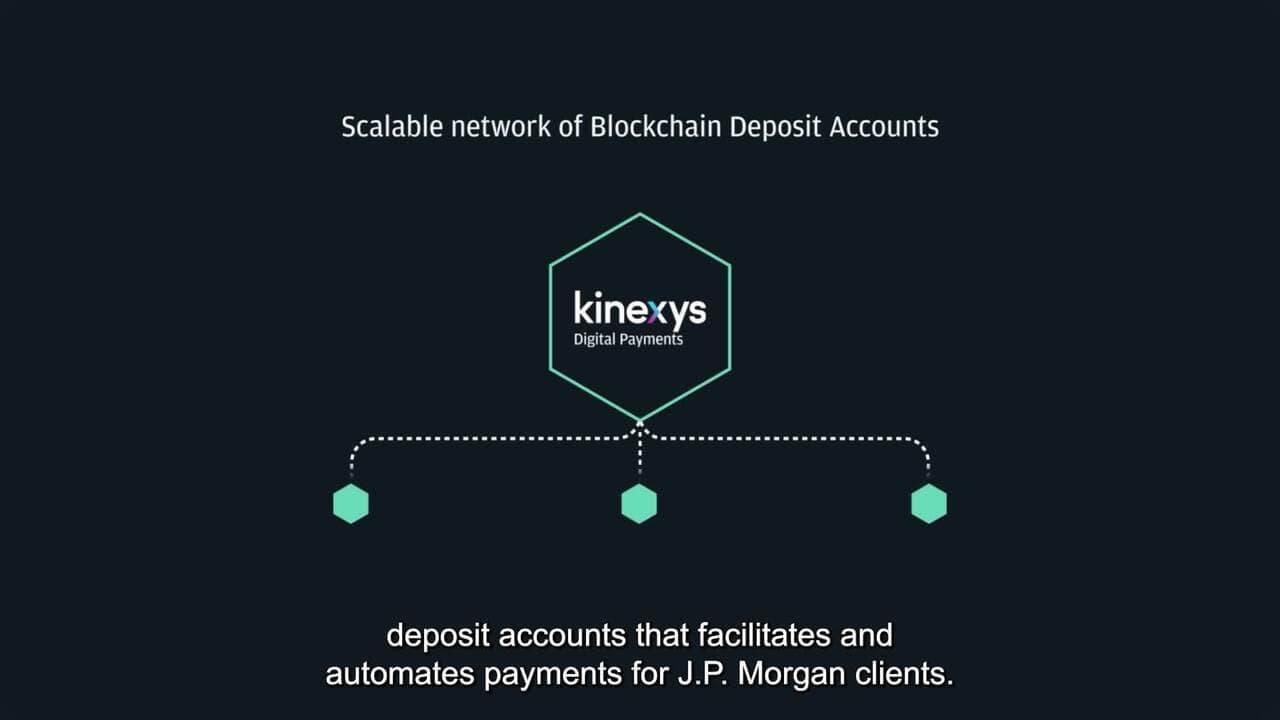 Image supplied by Crypto Sensei; Kinexys platform illustration, not an Ethereum JPMD transaction-volume chart.
On October 19, JPMorgan Chase announced that JPM Coin, its dollar-denominated deposit token, is now available on Ethereum for institutional customers.
The token, known as JPMD, originally launched on Base in November 2025. Its expansion to Ethereum gives institutional users additional blockchain infrastructure for transferring tokenized bank deposits.
A deposit token represents money held at a commercial bank. Unlike a conventional stablecoin, its underlying claim is against the issuing bank rather than a separate stablecoin reserve arrangement.
This distinction matters as traditional financial institutions develop their own forms of programmable money.
JPMorgan's Kinexys platform reports more than $4 trillion in cumulative transactions and average daily transaction volume of approximately $7 billion. Those figures relate to the broader Kinexys platform, not exclusively to JPMD transactions on Ethereum.
The expansion also reveals something important about institutional blockchain adoption.
Banks are becoming increasingly comfortable using public blockchain infrastructure for selected financial activities, provided they can retain the controls required for regulated operations.
For XRPL, this is both encouraging and competitive.
It validates the broader market opportunity for public blockchains offering payments, tokenization and settlement infrastructure. But it also demonstrates that major institutions have several options, including Ethereum, Base and their own permissioned networks.
There is no announced integration between JPM Coin and XRPL in this development.
The opportunity for XRP would emerge if institutional financial activity eventually required additional cross-network liquidity or settlement mechanisms that actually use XRP.
For now, JPMorgan's announcement confirms growing institutional adoption of tokenized bank money, not demand for XRP.
Cross River Bank Brings RLUSD Into Its Banking Infrastructure
 Image supplied by Crypto Sensei; original credit: @BankXRP. Not presented as an official bank-issued image.
One of the more direct XRPL adoption developments came from Cross River Bank.
On October 15, Cross River announced an expanded partnership with Ripple to integrate RLUSD into its Core Operating System, supporting transactions on the XRP Ledger.
The integration enables fintech customers to access RLUSD payments through a single API connection, alongside traditional banking services such as ACH, wire transfers and real-time payments.
This is an important distinction from simply announcing that a bank is exploring blockchain.
Cross River says customers can access RLUSD through its existing platform without building and maintaining separate blockchain infrastructure.
Imagine a fintech company operating payment services between the United States and Latin America.
Traditionally, that company might need different providers for banking connections, international transfers, currency conversion and settlement.
Cross River's approach aims to bring more of those capabilities into one banking environment, using RLUSD as an additional settlement option.
According to the bank, RLUSD had exceeded $2.5 billion in market capitalization, with more than $1 billion issued on XRPL at the time of the announcement. These are issuer-reported figures, not evidence that the same amounts have been transferred through Cross River.
Services remain restricted to certain US states.
RippleX executive Markus Infanger also emphasized the importance of stablecoins becoming integrated into banking infrastructure businesses already use, rather than functioning only in parallel payment systems.
That is arguably the strongest aspect of this announcement.
RLUSD gains another regulated distribution channel, while XRPL becomes part of an existing banking technology stack.
XRP is required for network transaction fees and applicable account reserves on XRPL, but RLUSD transfers do not necessarily use XRP as an intermediate settlement asset.
The next meaningful evidence will be transaction volumes, institutional customer adoption and whether XRPL liquidity routes begin using XRP more extensively.
Mastercard Targets a Major Barrier to Stablecoin Adoption: Financial Crime Risk
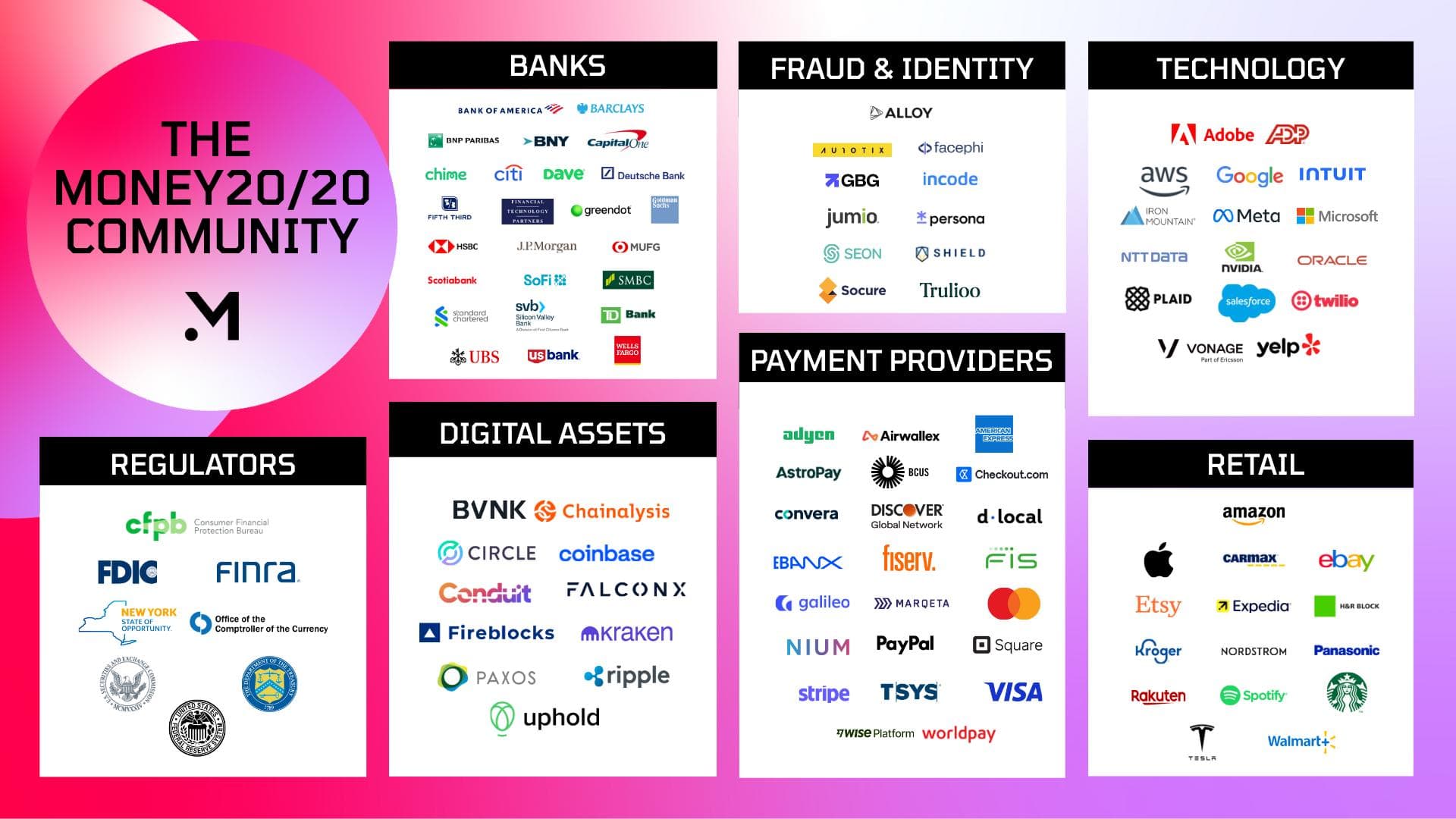 Image supplied by Crypto Sensei; Money20/20 community context, not evidence of a Mastercard–XRPL or RLUSD integration.
On October 19, Mastercard introduced Stablecoin Security at Money20/20 USA.
The new service is designed to help financial institutions identify fraud, scams, sanctions exposure and other financial-crime risks associated with stablecoin transactions.
Mastercard named Borderless.xyz and Keyrails as its initial partners, with North American rollout first and wider commercial availability expected in 2027.
Why compliance infrastructure matters
Stablecoin payments can settle quickly, but financial institutions still need to understand where funds originate, who controls them and whether transactions create regulatory exposure.
Mastercard's service combines conventional payment intelligence with blockchain analytics, allowing institutions to assess transactions before funds move on-chain.
This is particularly relevant to international business payments, where funds may pass through multiple intermediaries and jurisdictions.
The service is blockchain-agnostic in its stated design. Mastercard has not announced a specific RLUSD or XRPL integration through this initiative.
Nevertheless, the development addresses a challenge shared by Ripple Payments, RLUSD and other institutional stablecoin providers: scalable payments require more than fast settlement.
They also require reliable fraud detection, compliance checks, liquidity and operational controls.
As those supporting services improve, regulated institutions may find it easier to adopt stablecoin-based payment workflows.
That creates a broader opportunity for XRPL, but not guaranteed network adoption or XRP demand.
Final Thoughts: Institutional Adoption Is Becoming More Specific
October 19 delivered three different signals about the direction of digital finance.
JPMorgan expanded tokenized bank money to another public blockchain. Mastercard introduced additional compliance infrastructure for stablecoin payments. And XRPL's validators continued preparing the network for more advanced lending functionality.
Alongside Cross River's RLUSD integration, the broader picture is increasingly clear: regulated financial institutions are building infrastructure for digital assets that can support real business activity.
But adoption should be measured by what is operational.
For XRPL, the lending amendments still need validator approval. For RLUSD, Cross River's integration needs sustained transaction activity. For XRP, the most important question remains whether expanding institutional infrastructure creates measurable demand for the native asset itself.
The opportunity is growing. The evidence that matters next is usage, liquidity and real settlement activity—not simply the number of institutional announcements.

Partner spotlight
Crypto and precious metals for your retirement
Buy XRP, XLM, gold & silver in a tax-advantaged IRA.
$100 funding bonus when you open and fund a new IRA or PCA.*
Get started*Terms and conditions apply.
Sources
-
CoinDesk — XRPL lending fixes and validator voting, October 19, 2026 https://www.coindesk.com/tech/2026/10/19/xrp-ledger-is-set-to-fix-its-lending-code-before-anyone-can-use-it
-
JPMorgan — JPM Coin goes live on Ethereum, October 19, 2026 https://www.jpmorgan.com/payments/newsroom/jpm-coin-live-on-ethereum
-
Cross River Bank — RLUSD integration on XRPL, October 15, 2026 https://www.crossriver.com/newsroom/cross-river-embeds-ripple-usd-stablecoin-on-the-xrp-ledger-into-its-core-banking-infrastructure-expanding-faster-payment-capabilities-for-businesses
-
Mastercard — Stablecoin Security announcement, October 19, 2026 https://www.mastercard.com/us/en/news-and-trends/press/2026/october/Mastercard-brings-risk-intelligence-to-stablecoin-payments.html
-
Deutsche Bank — Digital asset custody expansion, Reuters, October 16, 2026 https://www.reuters.com/business/finance/deutsche-bank-prepares-crypto-custody-launch-targets-asia-growth-2026-10-16/